📍 Location: Ipswich
🏢 Client: Long‑standing Account Client
🔎 Summary
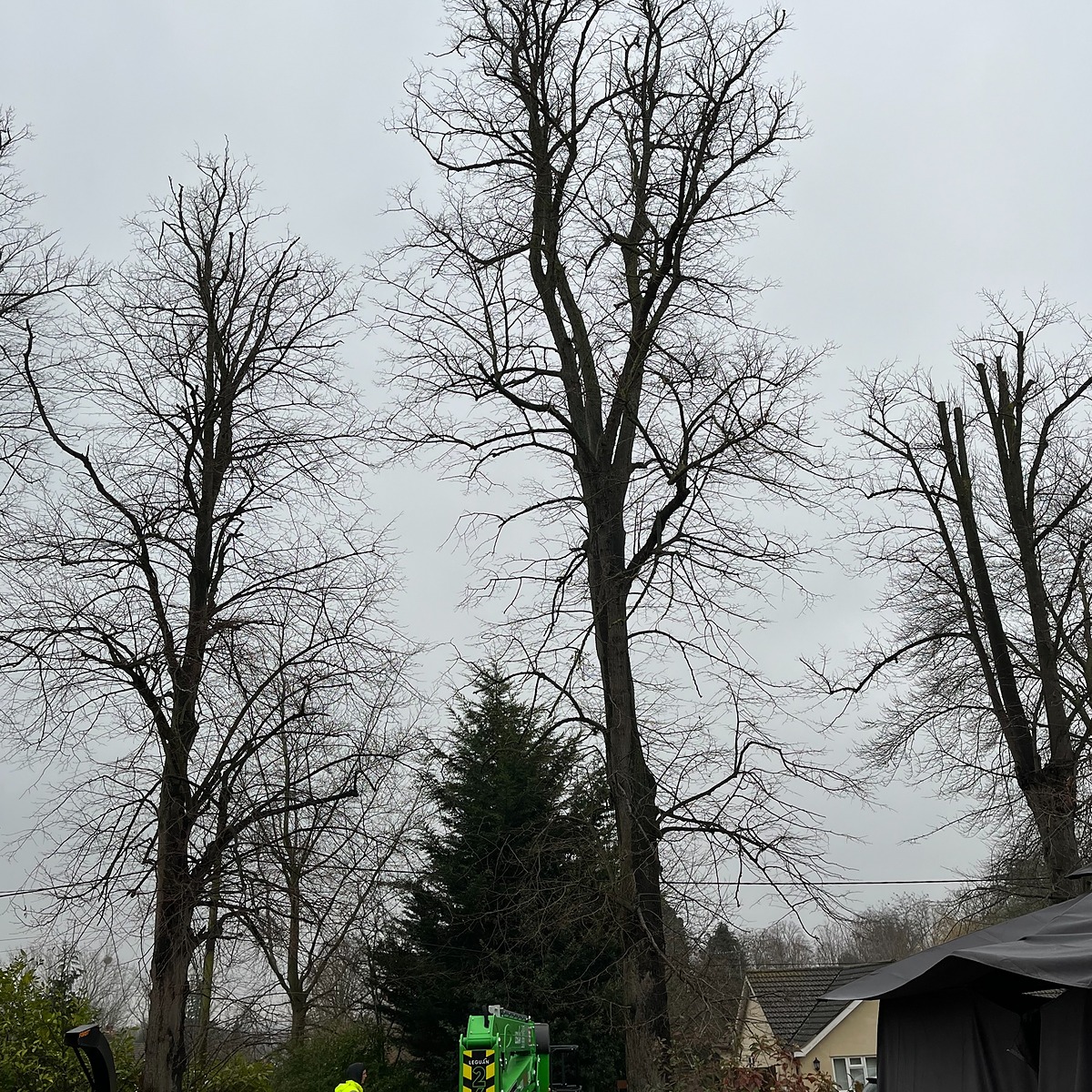
In autumn 2025, Countryside Trees was asked to assess a line of mature trees—five limes and one beech—after a branch unexpectedly fell and struck a parked vehicle. The incident prompted the client to request a full climbing inspection to understand the extent of Deadwood within the upper canopy and to determine whether any underlying issues were contributing to the decline.
Our inspection identified significant Deadwood across all six trees, with additional evidence of wildlife‑related damage, particularly from squirrels. To reduce risk to the property and surrounding area, a programme of Deadwood removal and sympathetic height reduction was recommended and carried out.
🎯 Objectives
- Assess the structural condition of the upper canopy
- Identify causes of Deadwood, including wildlife activity
- Reduce risk to vehicles, property, and pedestrians
- Improve long‑term tree health and stability
- Deliver a uniform, balanced reduction across all trees
🛠️ Project Execution
1. Climbing Inspection & Canopy Assessment
Our climbers carried out a full aerial inspection of each tree, focusing on:
- Extent and distribution of Deadwood
- Structural integrity of upper limbs
- Signs of wildlife damage (squirrel bark stripping, woodpecker cavities)
- Potential decay pockets forming around damaged areas
We found that squirrel activity had stripped bark from several upper limbs, interrupting the cambium layer and preventing nutrients from reaching the branch tips. This had led to progressive dieback. In turn, the decaying wood created ideal habitat for insects—attracting woodpeckers, which had begun forming cavities. While beneficial for biodiversity, these cavities can weaken branch unions and increase the likelihood of failure.
2. Risk Evaluation
Two of the lime trees were particularly large and stood within 10 metres of the property. Their height and exposure meant that unmanaged Deadwood and weakened limbs posed a credible risk during high winds.
Our assessment concluded that:
- Deadwood removal alone would not sufficiently reduce risk
- A controlled height reduction would limit wind‑sway
- Reducing sail area would improve long‑term stability
3. Safe Reduction Works
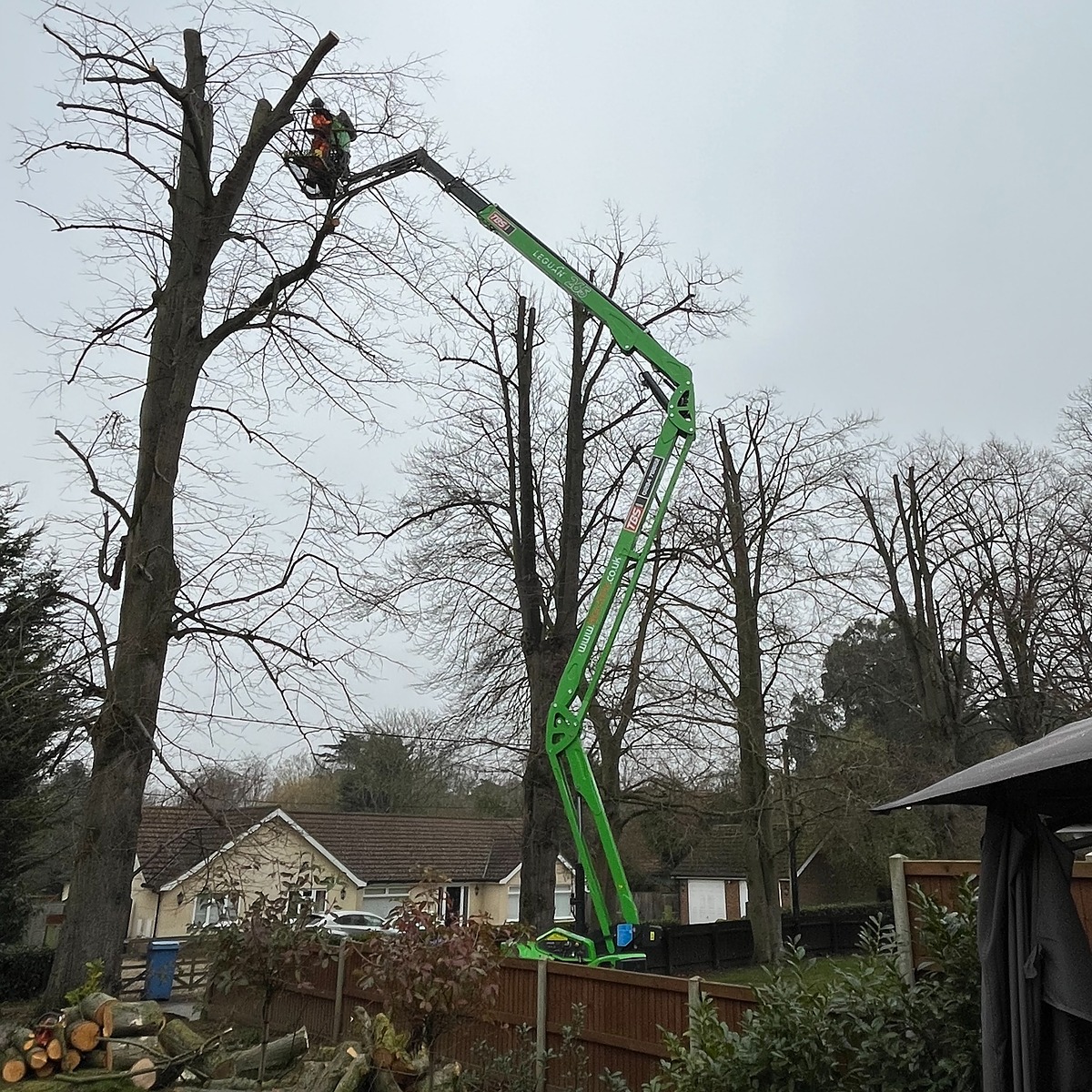
A 27‑metre cherry picker was brought in to give us clear, safe access to the upper canopy. Working from the platform, our team removed the limbs in manageable hand‑held sections, allowing for a controlled dismantle with minimal impact on the surrounding area. Our team:
- Removed all significant Deadwood from the canopy
- Reduced overall height to lessen wind loading
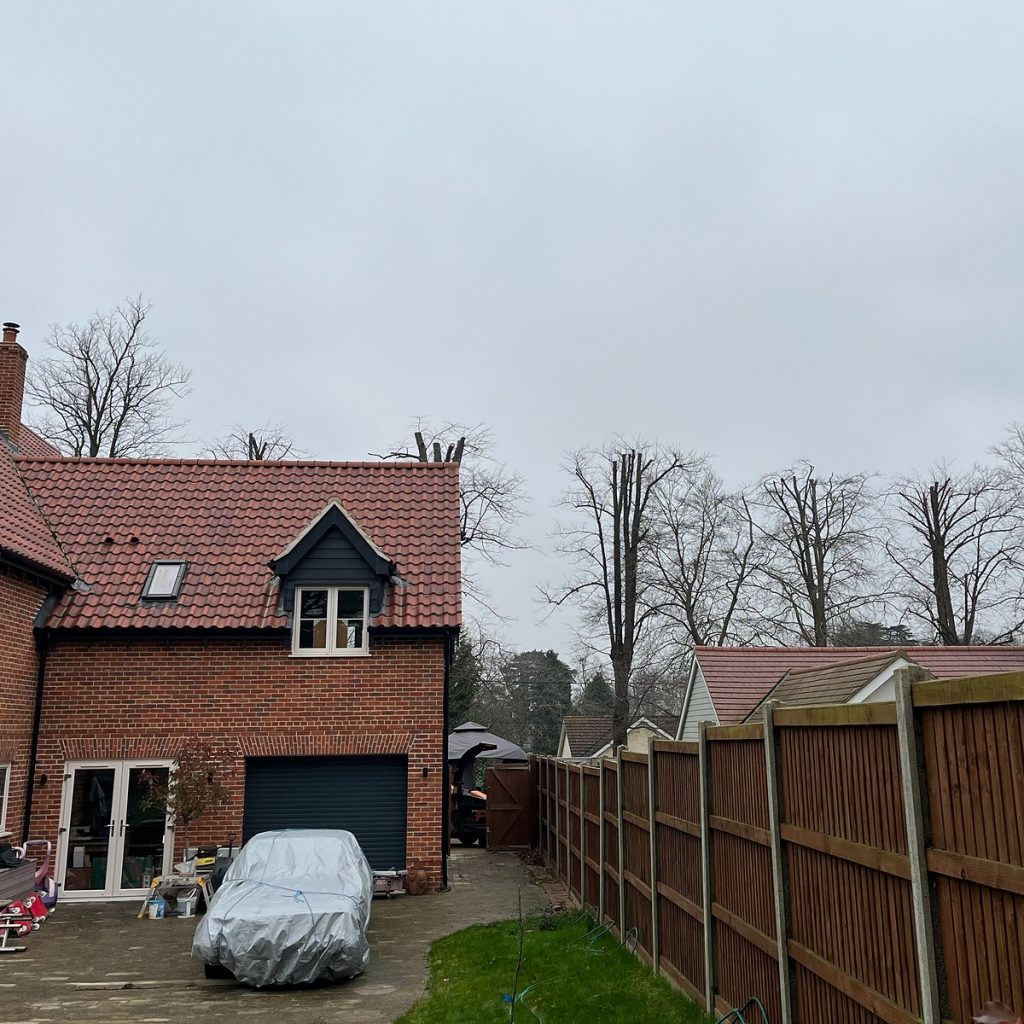
- Balanced the crown to create a uniform, tidy line
- Ensured all cuts were made sympathetically to promote healthy regrowth
The work required precise communication between climbers and ground crew, particularly when lowering heavier sections near the property boundary.
✅ Outcome & Evaluation
The trees were made safe, structurally balanced, and visually improved. The reduction significantly decreased the risk of branch failure, particularly during winter storms, while retaining the character and presence of the tree line.
The client was pleased with the outcome, noting the improved safety and the neat, consistent appearance of the trees following the works.